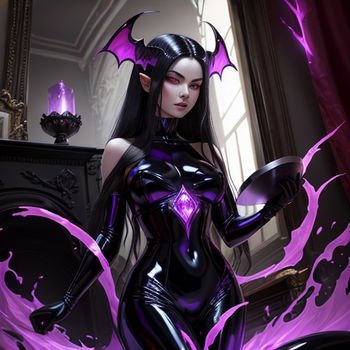
The magical succubus girl Lilith has long fascinated storytellers, scholars, and fantasy lovers. Her image blends mystery, charm, and danger into a figure that captures the imagination across cultures and centuries. Known as the first woman of the night, Lilith symbolizes independence, seduction, and supernatural strength. Although her origins are ancient, her presence continues to evolve in modern mythology, games, and art.
The Origins of Lilith in Mythology
The story of Lilith can be traced back to ancient Mesopotamian myths. She was first mentioned as a wind spirit, often associated with storms and dark magic. Later, in Jewish folklore, Lilith appeared as Adam’s first wife before Eve. According to legend, she was created from the same clay as Adam but refused to submit to him. Because of her defiance, she left Eden, becoming a symbol of rebellion and feminine power.
As time passed, Lilith transformed into the archetype of a succubus — a magical being who draws strength from human desire. Despite her demonic label, Lilith also represents freedom and the right to control one’s destiny. Her dual nature makes her one of mythology’s most complex figures.
Lilith as the Magical Succubus Girl in Modern Fantasy
In modern fantasy stories, anime, and games, the magical succubus girl Lilith is often portrayed as an alluring, powerful sorceress. Her charm is irresistible, yet her purpose extends beyond seduction. She is frequently shown as a guardian of forbidden knowledge, a manipulator of dreams, or a protector of dark secrets.
Through these portrayals, Lilith becomes more than a temptress — she is a mystical force of balance between light and shadow. Her magical aura often reflects the duality within every person: desire and control, temptation and wisdom.
Symbolism and Powers of Lilith
Every depiction of magical succubus girl Lilith shares a few common traits: beauty, intelligence, and power. She is believed to possess various supernatural abilities such as dream manipulation, shape-shifting, and energy absorption. In many tales, her magic is tied to the moon, symbolizing mystery and transformation.
Lilith’s power is not merely physical; it is psychological and emotional. Her presence often challenges societal norms about femininity and submission. As a succubus, she turns desire into empowerment, teaching that passion and independence can coexist.
Moreover, the magical energy associated with Lilith is thought to awaken creativity and courage. Artists, writers, and mystics often invoke her as a muse of inspiration. While her energy can be dark, it also represents liberation and the courage to embrace one’s shadow self.
Lilith’s Role in Pop Culture
The magical succubus girl Lilith has appeared in countless forms of pop culture. From video games like Diablo IV to anime and novels, her character often reimagines the traditional succubus myth. Each portrayal reflects the era’s view of women, power, and temptation.
In literature, Lilith has been described both as a villain and a misunderstood heroine. Some writers portray her as a tragic figure who sought equality but was punished for her strength. Others depict her as the embodiment of chaos and dark beauty, controlling her fate through magical prowess.
Regardless of interpretation, Lilith remains timeless — a being of divine rebellion and irresistible charm.
Why the Legend of Lilith Endures
The enduring appeal of magical succubus girl Lilith lies in her complexity. She represents power, freedom, and the acceptance of one’s desires without shame. Her myth encourages self-discovery and balance — a reminder that even darkness can hold wisdom.
Furthermore, Lilith’s legend resonates strongly with modern themes of empowerment and identity. Her story continues to inspire creators who seek to explore the boundaries of morality, love, and magic. Because of this, she remains one of the most captivating figures in both mythology and fantasy fiction.
Conclusion
The magical succubus girl Lilith is far more than a figure of temptation. She embodies transformation, strength, and the eternal struggle between independence and conformity. Through her, the line between myth and magic blurs, revealing the beauty in both light and shadow.
Leave a Reply